

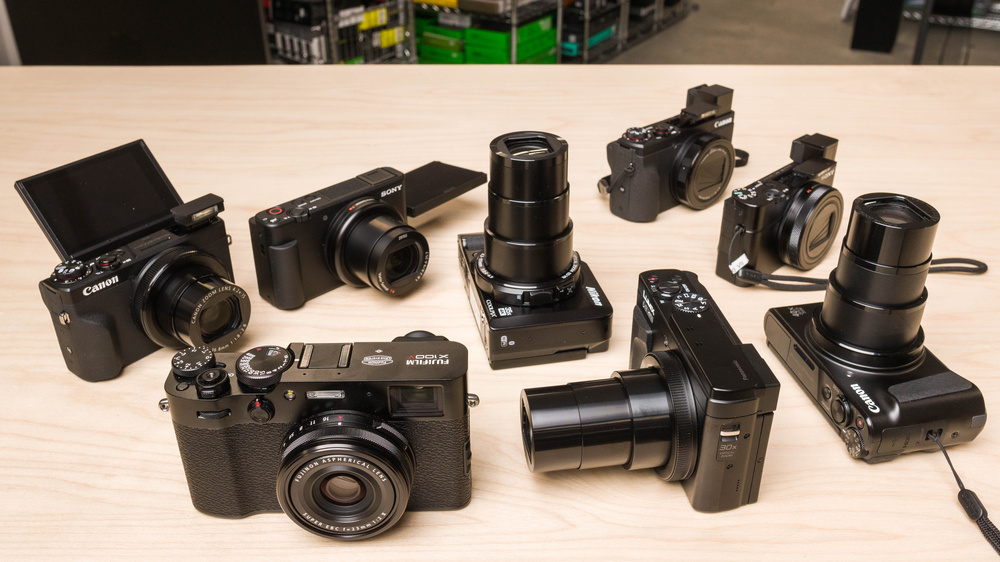
The “best compact cameras“ in 2026 offer sensor quality and manual controls that smartphones still can’t fully replicate. For travelers and street photographers, the Ricoh GR IIIx remains the gold standard for pocketable power, while the Sony ZV-1 II is the top choice for vloggers. If you’re looking for that “filmic” look, the Fujifilm X100VI continues to be a favorite, though supply remains tight due to its massive popularity on social media.
But ‘best’ depends heavily on what you shoot. A travel blogger needs different things than a street photographer or a parent capturing kids. This guide breaks it down by use case.
Why Compact Cameras Still Matter in 2025
| Feature | Compact Camera Advantage Over Smartphone |
| Sensor size | Larger sensors (1-inch or APS-C) mean better low-light performance and depth of field |
| Optical zoom | True optical zoom without quality loss – vs. digital crop on phones |
| Manual controls | Full control over shutter speed, aperture, ISO |
| Dedicated image processing | Purpose-built for photography – not split with 10 other functions |
| Lens quality | Fixed premium lenses (like Zeiss or Sony G) outperform phone camera modules |
| Battery & durability | Designed for longer shooting sessions; many are weather-sealed |
What to Look for in a Compact Camera
| Feature | Why It Matters | What to Look For |
| Sensor size | Bigger = better low light & background blur | 1-inch minimum; APS-C is premium |
| Aperture | Wider aperture = better in low light | f/1.8 or f/2.0 ideal for low light |
| Autofocus system | Critical for moving subjects | Phase-detect AF or eye-tracking AF |
| Video capability | If you shoot video | 4K/30fps minimum; 4K/60 is excellent |
| Image stabilization | Reduces blur in handheld shots | OIS (optical) is better than digital |
| Battery life | How long a single charge lasts | 250+ shots per charge is practical |
| Connectivity | For transferring photos quickly | Bluetooth + Wi-Fi transfer to phone |
Best Compact Cameras of 2025
| Camera | Sensor | Aperture | Video | Price (approx.) | Best For |
| Sony ZV-1 II | 1-inch BSI CMOS | f/1.8-4.0 | 4K/30fps | ~$700 | Vloggers, beginners, content creators |
| Ricoh GR IIIx | APS-C CMOS | f/2.8 fixed | 1080p only | ~$960 | Street photography, travel minimalists |
| Sony RX100 VII | 1-inch stacked CMOS | f/2.8-4.5 | 4K/30fps | ~$1,100 | All-round premium compact |
| Canon PowerShot V10 | 1-inch CMOS | f/2.8 fixed | 4K/30fps | ~$430 | Beginners, vlogging, budget upgrade |
| Panasonic LX10 | 1-inch MOS | f/1.4-2.8 | 4K/30fps | ~$400 (refurb) | Best value, good low light |
| DJI Osmo Pocket 3 | 1/1.3-inch CMOS | f/2.0 | 4K/120fps | ~$520 | Travel video, gimbal stabilization built in |
| Fujifilm X100VI | APS-C X-Trans | f/2.0 fixed | 6.2K/30fps | ~$1,600 | Premium all-around; film simulations |
Best Compact Cameras Under $500
If your budget is tight, these are the best options that still offer a genuine upgrade over a phone:
- Canon PowerShot V10 (~$430): Best entry-level pick for vloggers – 4K video, 1-inch sensor, straightforward interface
- Panasonic LX10 (~$350-400 refurbished): f/1.4 aperture is exceptional for low light; great stills
- Sony ZV-1 (original) (~$350-400): Slightly older than the II but excellent image quality and compact form
- DJI Osmo Pocket 3 (~$520 – just over budget but worth mentioning): Built-in gimbal makes video incredibly smooth
Compact Camera vs. Smartphone: When Is It Worth It?
| Situation | Worth Getting a Compact Camera? |
| Travel photography where weight matters | Yes – 1-inch sensor cameras weigh under 300g |
| Low-light events (concerts, restaurants) | Yes – larger sensor and wider aperture make a clear difference |
| Street photography | Yes – Ricoh GR IIIx is a cult favorite for a reason |
| Social media content creation / vlogging | Yes – Sony ZV-1 II is purpose-built for this |
| Casual family photos / everyday snapshots | Probably not – a modern flagship phone is sufficient |
| Sports and fast-action photography | Marginally – mirrorless or DSLR is better for this |
Tips for Getting the Most Out of a Compact Camera
- Learn to shoot in aperture priority (A/Av mode) first – easier than full manual, much better than auto
- Use RAW format if you edit photos – far more flexibility than JPEG
- Invest in an extra battery – most compacts get 200-300 shots on one charge
- Use the self-timer or wrist strap to reduce camera shake on slower shutter speeds
- The best compact is the one you actually carry – don’t buy a camera that lives in a drawer